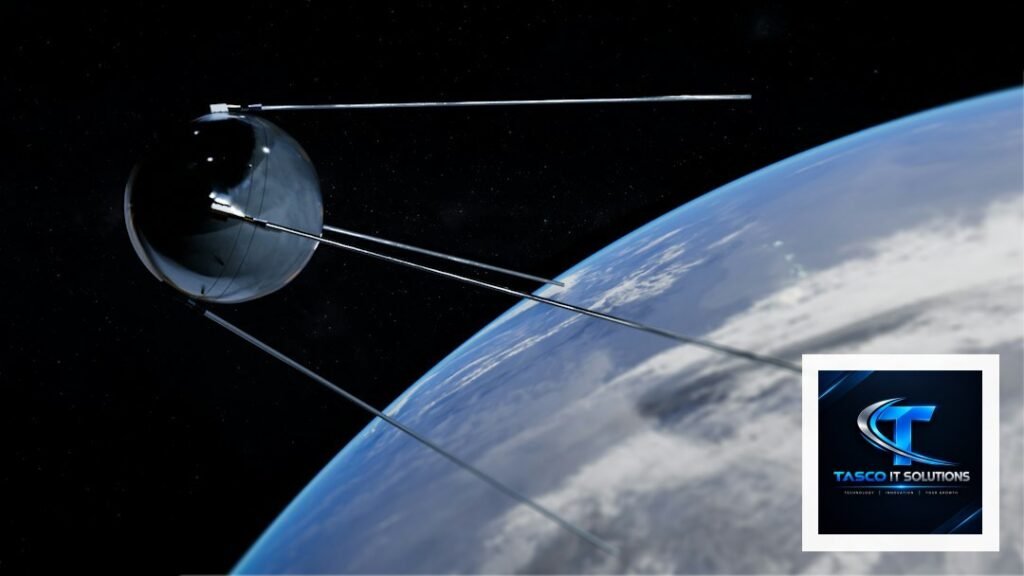
Your next AI model might one day run 500 kilometers above your head. On November 25, 2026, the US Federal Communications Commission gave SpaceX conditional approval to launch a constellation of up to 1 million satellites built to act as space data centers for AI computing.
It sounds like science fiction, and for now it largely is: the first operational satellite does not have to be in orbit for seven years. But the decision shows how desperate the tech industry is for computing power, and that pressure already affects the cloud bills of businesses in the USA, the UAE and Pakistan. Here is what was approved, what is still uncertain and what it means for your IT plans.
What are space data centers?
A data center is a building full of servers that stores data and runs software, including AI models. A space data center puts that computing hardware on satellites instead. The idea is that orbit offers constant solar power and room to scale without fighting for land, grid connections and water on the ground.
SpaceX calls its satellites Starmind. According to TechCrunch, the plan is to operate them at altitudes between 500 and 1,002 km. They would mainly talk to other satellites, including SpaceX’s Starlink network, using lasers, while radio links from Earth can take control if the primary systems fail.
What the FCC approved on November 25
The approval is real but conditional. The key facts reported so far:
- Size: up to 1 million satellites for SpaceX’s orbital data center business.
- Timeline: seven years to put the first operational satellite in orbit, and 14 years to deploy the full constellation.
- Still pending: the FCC has not yet approved SpaceX’s orbital debris plans for satellites operating above 600 km.
- Waiver request: SpaceX asked to be excused from the rule that satellites ending missions below 2,000 km must re-enter the atmosphere within five years.
FCC Chair Brendan Carr described the move as opening a new frontier for computing infrastructure. Not everyone agrees. Amazon, Viasat and the American Astronomical Society objected, raising concerns about orbital debris, congestion, radio interference and environmental impact. Amazon argued the application lacked basic details. The FCC said some of those concerns, such as the threat to scientific research, fall outside its authority.
Why space data centers are not coming soon
TechCrunch notes several hard problems still to solve: cutting satellite manufacturing and launch costs, keeping processors cool in space (where there is no air to carry heat away), and financing expensive AI chips that will be launched into orbit. In other words, this is a long-term bet, not a product you can buy next quarter.
Why space data centers matter for businesses in the USA and UAE
Even if you never rent a server in orbit, the story behind this approval affects you today.
AI computing demand is outrunning the ground
Companies are looking at space because building enough data centers on Earth is hard. Power, land and permits are bottlenecks, and New York has already imposed a moratorium on new data centers. Tight supply keeps AI and GPU cloud prices high, which shows up directly in the cost of running chatbots, analytics and automation.
Where your data lives will matter even more
Businesses in the UAE, especially in finance, healthcare and government supply chains, already think hard about data residency and which country hosts their data. Computing in orbit raises new questions about jurisdiction and compliance. If your current cloud setup has no clear map of where each workload and dataset sits, now is the time to build one.
Connectivity and resilience
Satellite networks are becoming part of normal business infrastructure, from Starlink backup links to future orbital compute. Companies with multi-region, well-documented cloud setups will be able to adopt new options when they become real, instead of being locked into one provider.
Practical next steps for your cloud and AI strategy
- Measure your AI compute spend. Track what you pay for AI APIs, GPUs and cloud each month, and which features drive the cost.
- Right-size your models. Many tasks run fine on smaller, cheaper AI models. Test them before paying for the largest option.
- Map data residency. Document where every key dataset and workload is hosted, and which regulations apply in the US, UAE and Pakistan.
- Design for portability. Containers, infrastructure as code and multi-cloud practices make it easier to move workloads when prices or options change.
- Plan for resilience. Add backup connectivity and test failover so an outage or capacity crunch does not stop your business.
TASCO’s cloud and DevOps team can review your architecture and costs, and our AI and automation experts can help you pick the right model size for each job. For ERP and CRM workloads, see our CRM and ERP solutions. Want to cut cloud costs during development? Read our guide on running AWS locally with an emulator.
Frequently asked questions
What is a space data center?
It is computing hardware, like the servers in a normal data center, placed on satellites in orbit. Supporters say it can use constant solar power and avoid land and grid limits on Earth.
When will SpaceX space data centers be available?
Not soon. Under the FCC approval, SpaceX has seven years to put the first operational Starmind satellite in orbit and 14 years to deploy the full constellation.
Will space data centers make AI cheaper for businesses?
Possibly in the long run, if launch, cooling and chip financing costs fall. For the next few years, businesses will save more by optimizing their current cloud and AI usage.
Talk to us about your cloud and AI costs
Want a clear plan for AI and cloud spending in 2027? Message TASCO IT Solutions on WhatsApp at +971 58 661 3940 or email info@tascoit.com. We support businesses in the USA, Dubai and Pakistan.